
Trauma-Informed Therapy
Trauma-Informed Therapy is an approach that places emotional safety, trust, choice, and sensitivity at the centre of the therapeutic process. It recognises that trauma can affect how people feel, cope, relate, and respond, and it aims to provide support in a way that feels safer and more respectful.
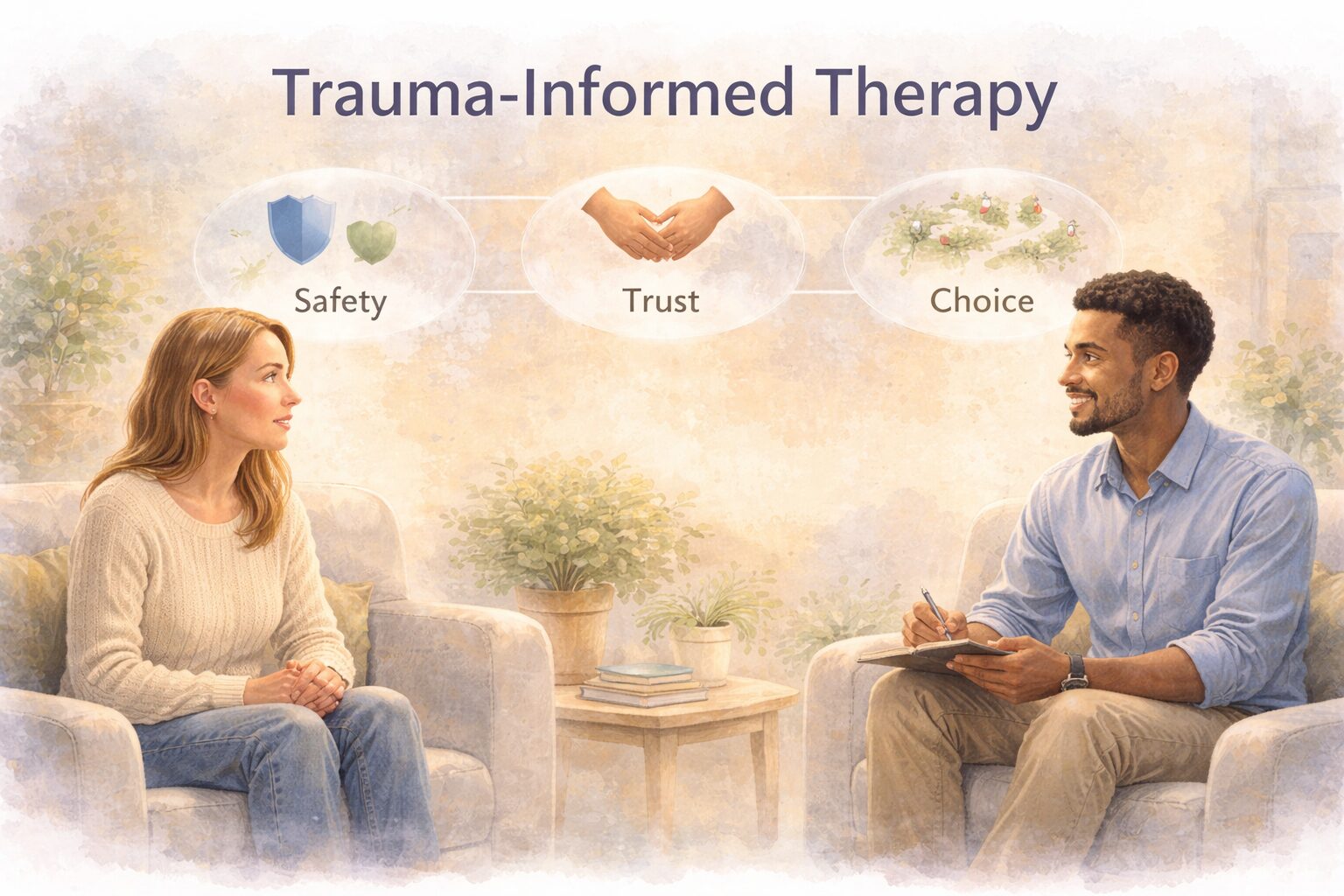
A therapy approach centred on emotional safety and sensitivity
Trauma-Informed Therapy is not one single technique. It is a way of working that recognises how trauma may affect the mind, body, emotions, relationships, and sense of safety. It shapes how therapy is offered so that the process feels more collaborative, respectful, and attuned to what you need.
This approach is often helpful for people who have experienced trauma directly, as well as those who feel easily overwhelmed, disconnected, hyper-alert, emotionally shut down, or unsure how past experiences may still be affecting them.
Trauma-informed support is not about forcing difficult memories or pushing too quickly. It is about helping you feel safer, more understood, and better supported as therapy moves at a pace that feels manageable.
What Trauma-Informed Therapy often focuses on
Safety
Creating a therapeutic space that feels emotionally and relationally safer to be in.
Trust
Building therapy around openness, consistency, and respect so trust can develop gradually.
Choice
Supporting your sense of agency by respecting your pace, boundaries, and preferences.
Collaboration
Working with you rather than doing therapy “to” you, so the process feels shared and empowering.

Support for healing, steadiness, and emotional safety
Trauma-informed work can help reduce the sense of being rushed, misunderstood, or overwhelmed in therapy. It supports a gentler process where emotional regulation, trust, body awareness, and self-protection can be built alongside deeper therapeutic work.
- Build greater emotional and relational safety in therapy
- Support regulation when trauma responses feel overwhelming
- Respect personal boundaries, pacing, and choice
- Reduce fear of being pushed too quickly into painful material
- Create a steadier foundation for longer-term healing
Situations where Trauma-Informed Therapy can be especially useful
Trauma recovery
Helpful for people working through the impact of trauma, abuse, neglect, violence, or distressing life events.
Overwhelm and hyper-alertness
Can support those who feel on edge, easily triggered, emotionally overloaded, or constantly braced.
Difficulty feeling safe
Useful when trust, safety, and emotional steadiness are hard to access in relationships or therapy.
A gentler and more collaborative therapy experience
Trauma-Informed Therapy often feels less about pressure and more about creating the right conditions for healing. Sessions may involve building safety, understanding trauma responses, exploring coping tools, and moving gradually at a pace that feels manageable for you.
Explore whether Trauma-Informed Therapy feels right for you
If emotional safety, trust, and a gentler therapeutic pace feel important to you, Trauma-Informed Therapy may be a meaningful approach to explore.
Meet therapists who may work in a trauma-informed way
Browse professionals who can offer therapy with attention to safety, trust, pacing, trauma sensitivity, and emotional support.

Roberta Dutra