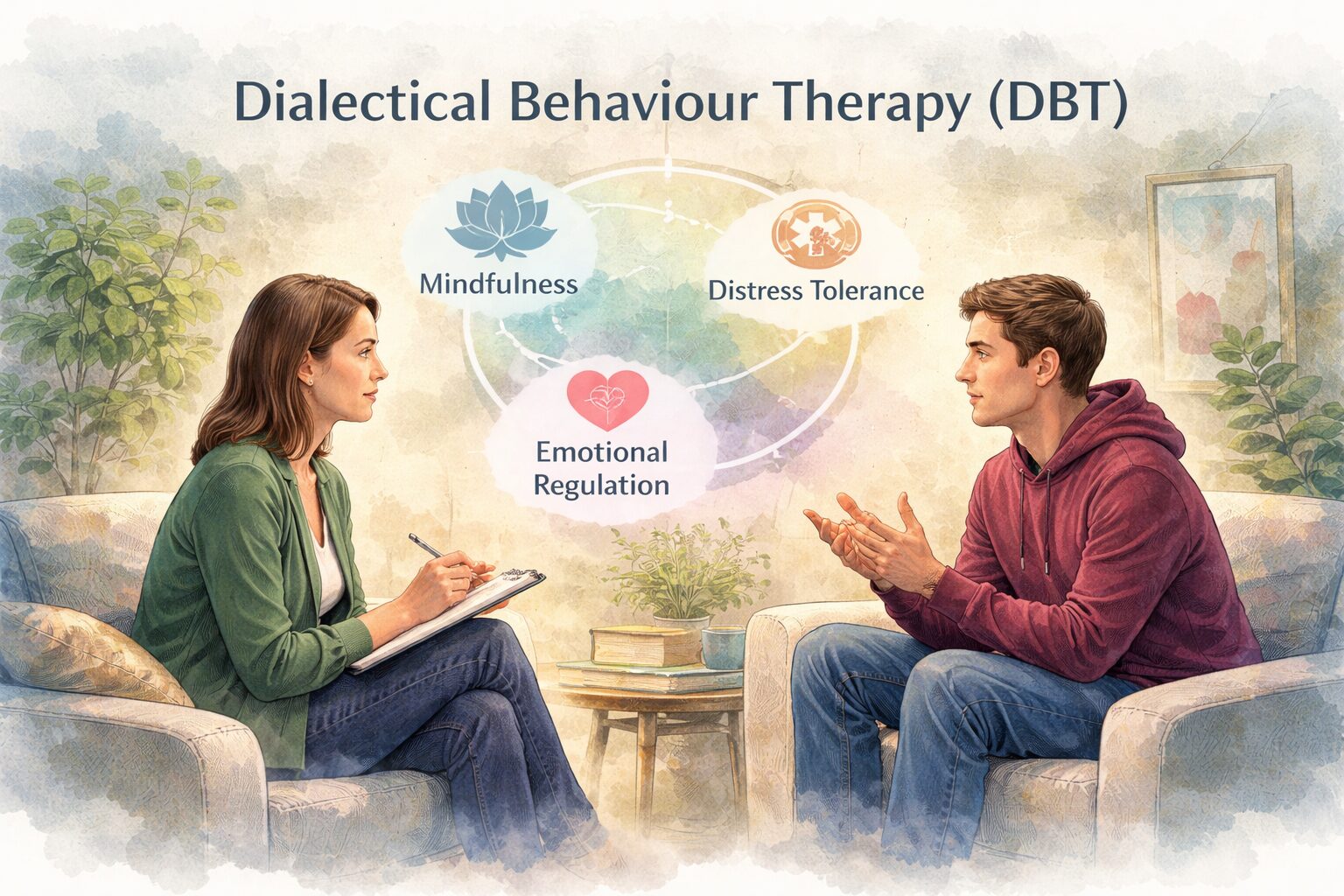
Dialectical Behaviour Therapy (DBT)
Dialectical Behaviour Therapy, often known as DBT, is a structured and practical therapy approach designed to help people manage intense emotions, cope with distress, improve relationships, and build healthier ways of responding when life feels overwhelming.
A practical therapy approach for emotional regulation and distress tolerance
DBT was developed to support people who experience emotions very intensely or find it difficult to stay steady when under stress. It combines emotional understanding with practical strategies that can help you respond more effectively in difficult moments.
Rather than focusing only on why emotions happen, DBT also helps you build concrete tools for coping with them. It is especially helpful for people who feel easily overwhelmed, struggle with emotional ups and downs, or want support with communication and relationships.
DBT is not about becoming emotionally numb or forcing yourself to stay calm all the time. It is about learning how to recognise what you are feeling, tolerate distress more safely, and move toward healthier choices even when emotions are strong.
The main skills DBT focuses on
Mindfulness
Learning to notice thoughts, feelings, and situations more clearly without immediately reacting to them.
Distress tolerance
Building tools to cope with painful moments more safely when emotions feel too intense to manage.
Emotional regulation
Understanding emotional patterns and developing healthier ways of responding when feelings escalate.
Interpersonal effectiveness
Improving communication, boundaries, and relationship skills while staying more grounded and clear.

Support for overwhelming emotions, relationships, and coping
DBT can be especially helpful when emotions feel difficult to manage or when stress quickly turns into shutdown, conflict, or impulsive reactions. It supports you in learning how to pause, respond more intentionally, and build a stronger sense of internal stability.
- Develop practical tools for emotional regulation
- Improve tolerance for distress without becoming overwhelmed
- Build more effective communication and relationship skills
- Reduce impulsive or reactive patterns in difficult moments
- Strengthen self-awareness and more balanced coping responses
Situations where DBT can be particularly useful
Intense emotions
DBT can help when feelings become overwhelming, fast-changing, or difficult to regulate.
Relationship difficulties
It can support healthier communication, clearer boundaries, and more balanced responses in conflict.
Stress and impulsive reactions
DBT may help when distress quickly leads to reactive decisions, shutdown, or difficulty coping safely.
A balance of reflection, structure, and practical skills
DBT sessions often involve talking through current challenges while also learning and practising specific coping skills. This makes it a helpful approach for people who want therapy to feel both supportive and practical.
Explore whether DBT could be the right approach for you
If you are looking for a practical therapy approach that can help with emotional regulation, distress, relationships, and coping skills, DBT may be worth exploring.
Meet therapists who may use DBT or DBT-informed support
Browse professionals who can support emotional regulation, distress tolerance, relationship difficulties, and practical coping strategies.

Donna Murison